Product-side process
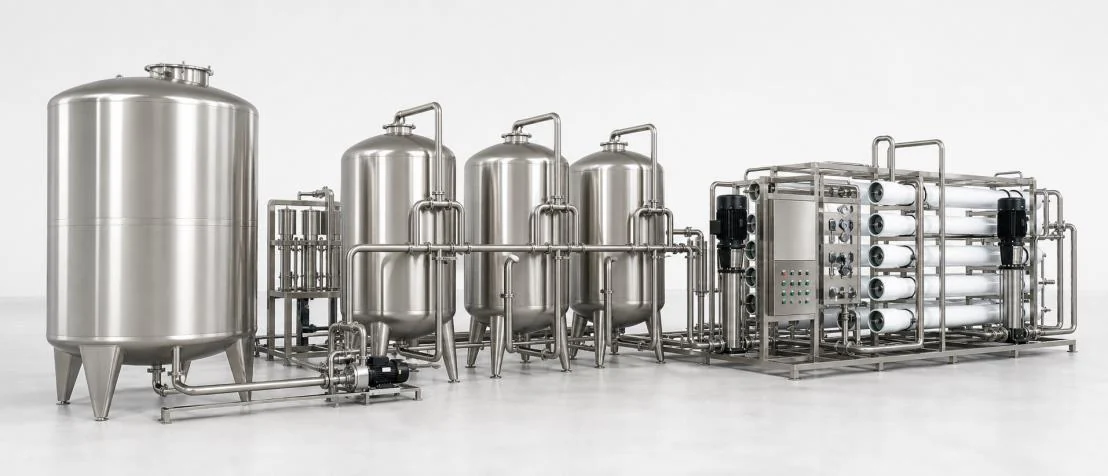
Water treatment, ingredient and syrup preparation, mixing, carbonation or thermal processing, buffers and CIP.
- Confirmation needed
- Process recipe, raw-water basis, hygiene target and usable product flow.
Architecture before equipment
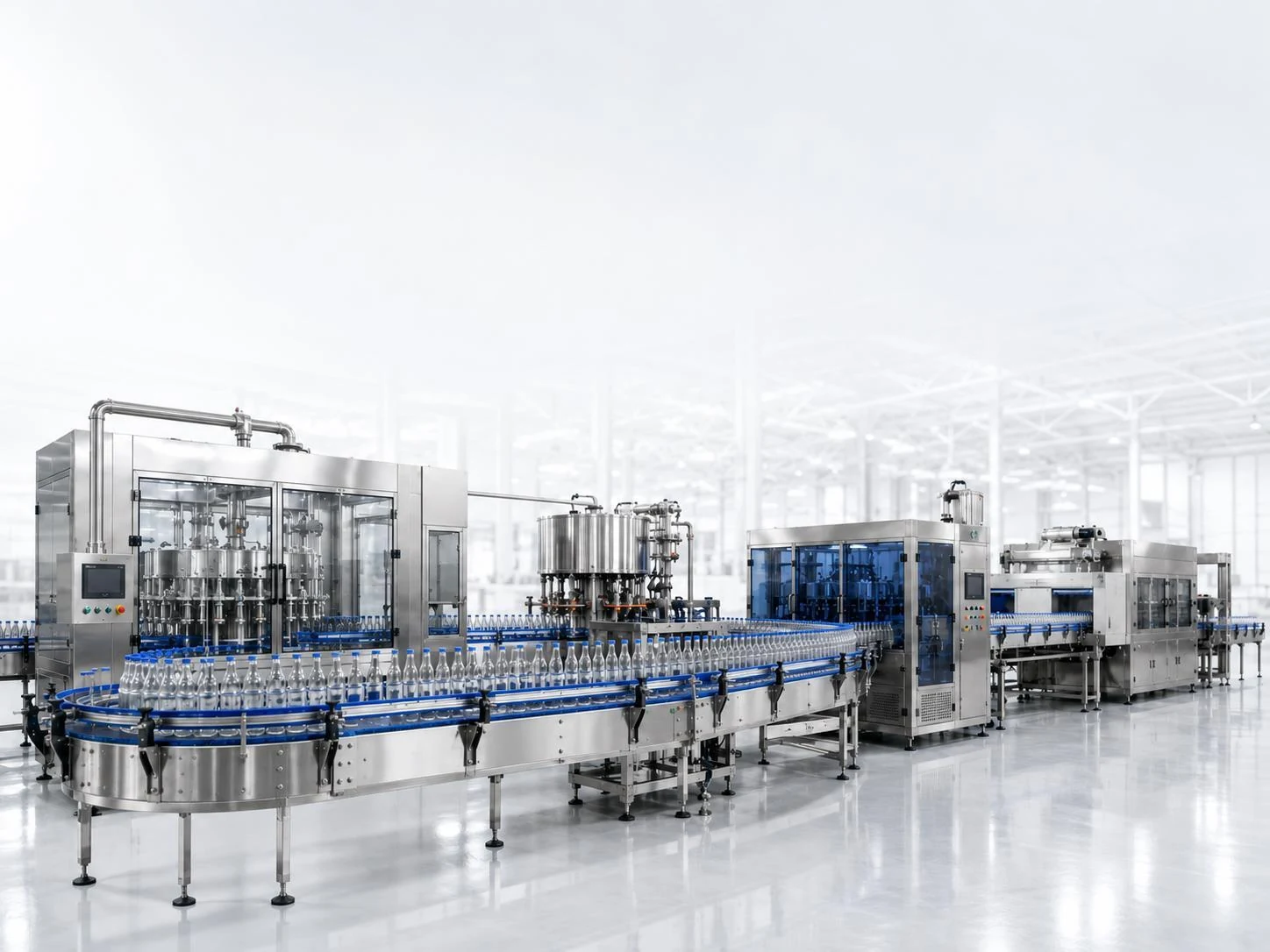
A complete beverage line connects recipe preparation, process conditions, container handling, filling, post-fill treatment and packaging around one confirmed product brief.
Final equipment, layout and performance are confirmed against the project brief.
Answer first
A complete beverage bottling line links product preparation, treatment, container preparation, filling and closure with inspection, labeling and secondary packing. A carbonated drink needs a coordinated chilling, mixing, carbonation and pressure-filling route; a hot-fill juice needs an approved heat-treatment, bottle-and-closure and cooling route. Confirm which equipment, utilities, installation and acceptance tests are included before comparing quotations.
Scope boundary map
Compare quotations by the same five zones and require every responsibility to be marked included, optional, excluded or buyer-supplied.
Water treatment, ingredient and syrup preparation, mixing, carbonation or thermal processing, buffers and CIP.
Preform blowing or empty PET, glass or can receiving, preparation, inspection and transfer.
Product delivery, filling, closure, inversion, warming or controlled cooling where applicable.
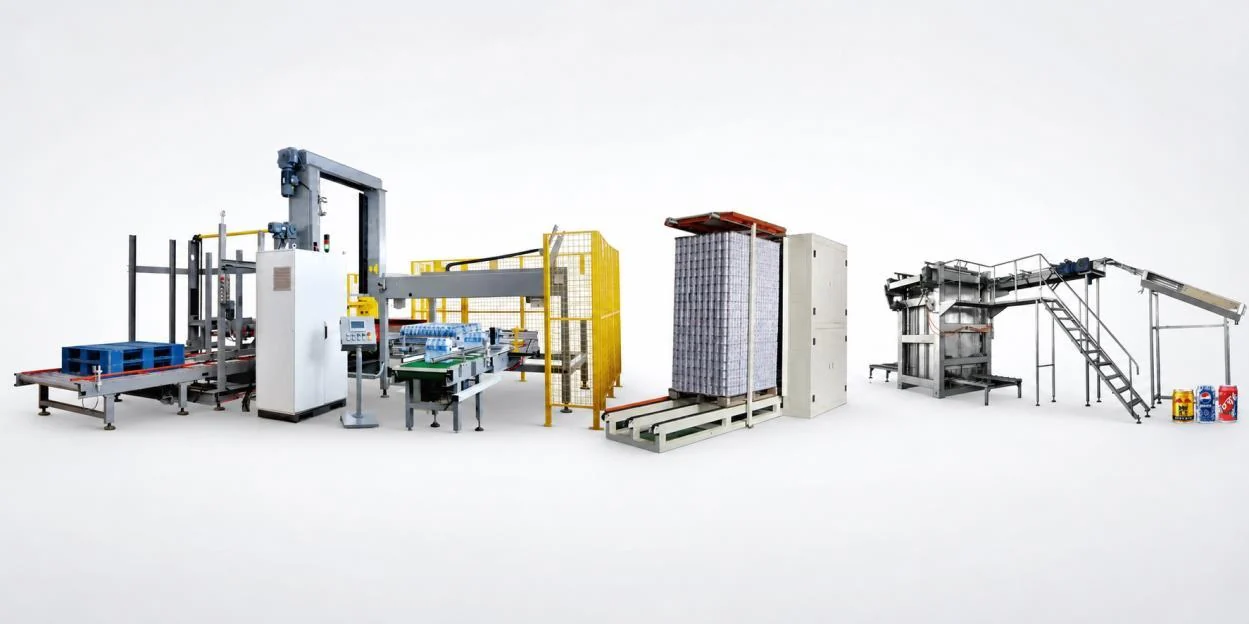
Inspection, coding, labeling, secondary packing, conveying and defined discharge.
Utilities, layout, controls, documentation, FAT, shipment, installation, training and service as contracted.
Route-specific equipment map
The common answer is preparation, container supply, fill/close, post-fill treatment, inspection and packing—but the actual equipment list changes with the beverage, preservation route and package.
| Line route | Preparation + process | Fill + close | Post-fill + packing | Evidence to close |
|---|---|---|---|---|
| Still / ambient route | Product-water treatment, ingredient preparation and hygienic storage as required by the confirmed beverage | Container preparation, suitable still-product filling and closing | Inspection, coding, labeling, secondary packing and the agreed discharge | Product hygiene basis, fill result, closure and saleable-pack condition |
| CSD / sparkling route | Water and syrup preparation, proportioning, deaeration where required, chilling, carbonation, CO2 and CIP | Pressure-compatible container supply, counter-pressure filling and immediate closing or seaming | Conditioning or warming only where required, then inspection, decoration and packing | Brix or blend, temperature, carbonation, foam, net content and sealed-package integrity |
| Juice / tea hot-fill route | Recipe preparation, filtration, optional homogenization or deaeration, product-specific heat treatment and hygienic buffer | Hot-fill-compatible bottle and closure, hot transfer, filling and closing | Closure contact or inversion where applicable, controlled cooling, drying, labeling and packing | Validated process delivery, fill/hold history, cooling profile, package shape and closure integrity |
| Aseptic / sensitive route | Formula-specific preparation and validated thermal or other treatment connected to a controlled sterile boundary | Qualified aseptic buffer, transfer, filler environment, package treatment and closure system | Protected discharge, inspection, coding and packing under the validated handling plan | Process authority, sterile-boundary qualification, package integrity and requalification evidence |
| Plant-wide systems | CIP, utilities, automation, laboratory, drainage, hygienic zoning and material logistics | Container and product quality controls, rejects, data and line-state coordination | Accumulation, finished-pack handling, pallet or warehouse boundary | Common reference SKU, FAT/SAT records, training, spares and controlled handover |
Start from the observed symptom
Do not adjust the nearest machine first. Choose the visible problem, protect affected production, align the evidence and then test the connected mechanism.
Check first: Product temperature, dissolved CO2, filler pressure, valve pattern and stop/restart history.
Evidence: Compare good and bad valves or operating states before changing pressure or venting.
Open the root-cause guide →Check first: CO2 delivered to the filler, fill sequence, headspace, closing delay, closure integrity and sample age.
Evidence: Measure before filling and in conditioned finished packages using one declared method.
Open the root-cause guide →Check first: Bottle/cavity identity, fill level, headspace, closure seal, cooling stages and pressure history.
Evidence: Align package temperature and pressure with the exact time and location of deformation.
Open the root-cause guide →Check first: Can and end lots, seamer head, chuck/roll setup, product pressure, teardown and leak results.
Evidence: Quarantine affected production and stratify retained samples by head, lot and time.
Open the root-cause guide →Check first: Bottle and cap lots, capper head, application/removal method, sample age, conditioning and leak duty.
Evidence: Stratify retained packs by component lot and head before changing torque settings.
Open the root-cause guide →Check first: Container capacity, density/temperature, foam, valve position, sensor state and fill distribution.
Evidence: Do not use the average alone; compare both distribution tails by valve and package lot.
Open the root-cause guide →Check first: Batch cycle, release delay, usable buffer, pump/pressure trends, treatment duty, CIP and changeover timing.
Evidence: Put released supply and filler demand on one timeline, including restart and peak states.
Open the root-cause guide →Check first: Common clocks, state codes, sensors, rejects, materials, operator actions and affected SKU.
Evidence: Rank repeat losses by frequency and duration, then observe the physical initiating event.
Open the root-cause guide →Check first: Package geometry, exact location, guides, transfers, lubrication, speed transitions and back pressure.
Evidence: Capture the event and compare affected packages with an approved format at the same state.
Open the root-cause guide →Check first: Container surface temperature, dew point, residual moisture, dryer condition, adhesive and cure time.
Evidence: Measure the surface through labeling and packing instead of testing a dry room-temperature sample.
Open the root-cause guide →Check first: Separate production, rinsing, CIP, cooling, lubrication, regeneration, idle and leak demand by state.
Evidence: Reconcile metered water to good output while preserving hygiene and product requirements.
Open the root-cause guide →Check first: Supply/return flow, temperature, conductivity, valve route, tank concentration and circuit identity by phase.
Evidence: Verify instruments and the physical circuit before accepting a program-complete signal as cleaning proof.
Open the root-cause guide →Original engineering worksheets
These resources expose the inputs and formulas. They do not publish invented universal prices, speeds, utilities or performance guarantees.
Convert rate, scheduled time, planned stops, running factor and yield into a transparent planning quantity.
Open the worksheet →Calculate availability, performance and quality at one declared line boundary and keep the underlying loss tree visible.
Open the worksheet →Turn a named short downstream disturbance into a first-pass container count before physical conveyor design.
Open the worksheet →Mark every process, packaging, site and execution block included, optional, excluded, buyer-supplied or unclear.
Open the worksheet →Expose the product, package, output, factory and acceptance gaps that prevent like-for-like quotations.
Open the worksheet →Separate unsupported claims from submitted documents and witnessed evidence before commercial award.
Open the worksheet →Map space, access, drains, utilities, material routes and open site responsibilities before positions are frozen.
Open the worksheet →Separate factory checks, site completion, representative product testing, deviations and final handover evidence.
Open the worksheet →Complete beverage-line engineering guide
These are the primary search and decision paths. Each guide answers one distinct question, then reconnects it to the same process-to-pack architecture.
The beverage determines preparation, filling condition and post-fill treatment.
Container supply, pressure, heat and closure interfaces reshape the complete line.
Preparation, filling, treatment and packing must sustain one reference product and package.
Capacity, utilities, layout, cost and responsibility boundaries make proposals comparable.
Use distinct application, process, packaging and plant questions without losing the complete-line context.
Deepen the complete-line design with measurable formula, sanitation, package, project and resource decisions.
Use symptom-led root-cause guides and facility-planning guides to connect production evidence with the building and logistics around the line.
Use controlled calculations and package evidence before the filling system is frozen.
Carry acceptable packs through the end of line while preserving traceable machine states and maintainability.
Move the product from controlled trials into a utility-supported, commercially defined production system.
Start from the product family, then connect preparation, preservation, filling, package and release as one route.
Resolve the cross-product receiving, dosing, transfer, separation, gas, homogenization and thermal duties that change the line.
Connect the preservation boundary to aseptic, hot-fill, tunnel, can, glass, returnable, closure, decoration and material controls.
Turn food safety, laboratory, traceability, safety, market access, qualification, training and shelf-life questions into evidence.
Product basis
Carbonation, ingredients, particles, filling temperature, hygiene target and recipe preparation can change the architecture before a filler is selected.
Package basis
PET, glass and cans need different preparation, transfer, filling, closure and downstream interfaces even when the beverage is similar.
Performance basis
A nominal filler speed does not define line output. Upstream preparation, bottle supply, temperature stability, accumulation and the packer must sustain the agreed reference condition.
Buyer questions
These are planning answers. Final process and equipment choices require a confirmed project brief.
No. The product, recipe, carbonation, temperature, hygiene target and container change both upstream processing and filling/downstream requirements.
No. Output must be tied to a reference container and product, and supported by recipe, packaging, factory and utility inputs.
Catalog reference The supplied 2026 catalog supports the named CSD and juice/tea equipment chains and is the source for the redrawn functional routes.
Engineering principle Interface explanations show why product, process, package, utilities and line balance must be reviewed together.
Project confirmation The routes are not a final process design, P&ID, validated cycle, quotation, availability statement or performance guarantee. Signed project documents define the final scope.
Allot Tech project desk
For a useful first reply, send the beverage, package, target good output and factory. If a line is already operating, add the observed symptom, first-known-good and first-known-bad time, affected SKU, photos, alarms and available production data.
Company verification: visit allottech.com.