Skip to content

CSD process architecture

Carbonated Soft Drink Production & Bottling Line

A carbonated beverage line controls product preparation, CO2, temperature and pressure before pressure-controlled filling and coordinated packaging.

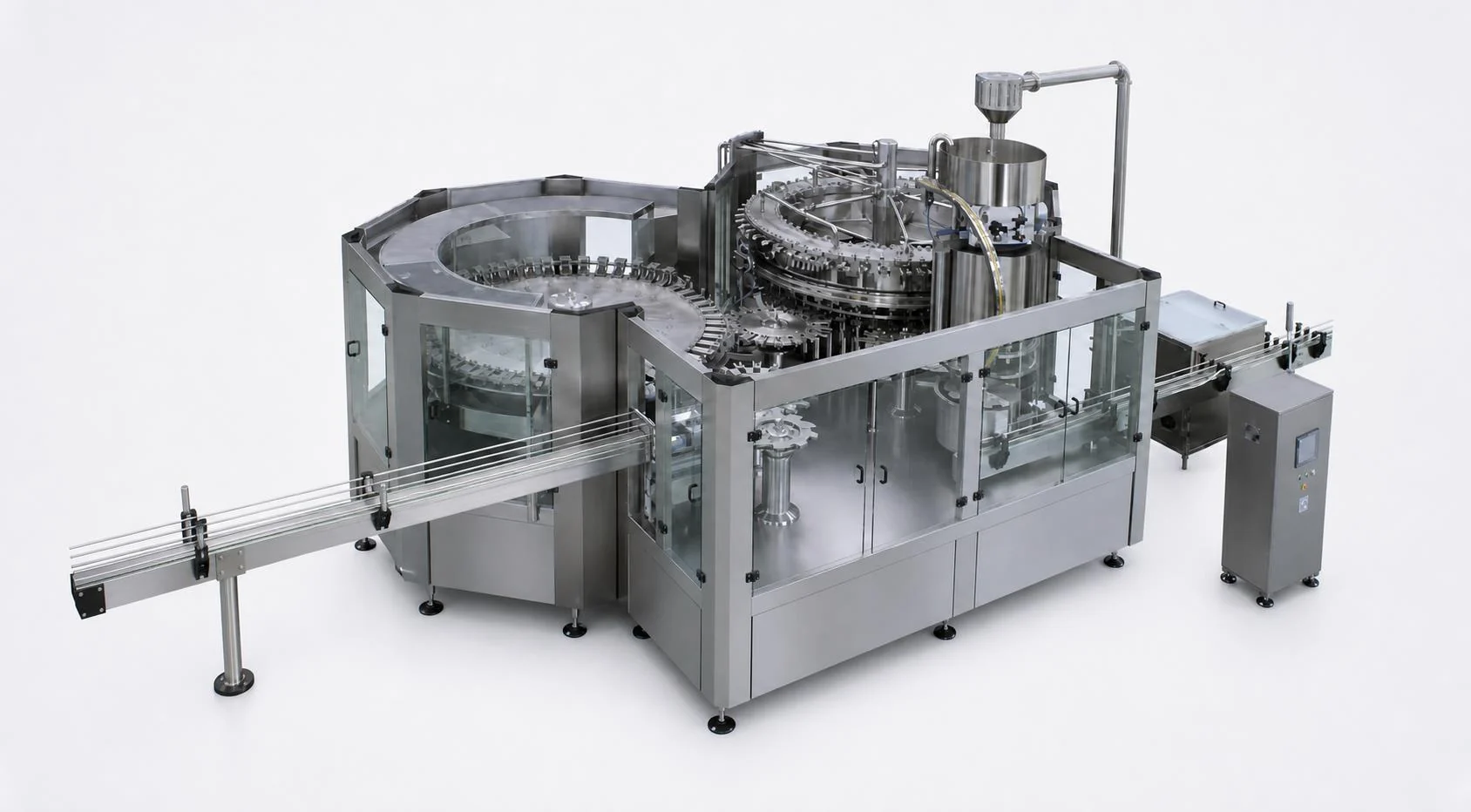
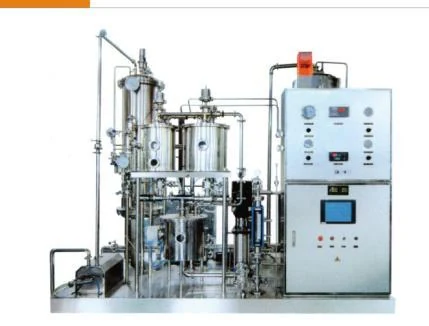
Catalog equipment reference

Final equipment, layout and performance are confirmed against the project brief.

Carbonated beverage isobaric filling monoblock reference configuration
Beverage mixing system reference configuration
Carbonated beverage complete line architecture from preparation to packing

Answer first

Why is a CSD line different?

Carbonation makes temperature, dissolved gas, pressure and foam part of the filling problem. The mixer, chilling, CO2 system, buffer or storage where required, filler and downstream handling must be treated as one operating route.

Carbonated beverage architecture
Product water
01Raw-water review 02Selected treatment 03UV / hygienic control 04Chilling
Package
01PET blowing or can handling 02Pressure-controlled filling 03Closure 04Warming if required
Sanitation
Finished pack

Functional decision route, redrawn from the supplied catalog reference. It is not a P&ID or final equipment sequence.

Three questions to settle before buying this line

Can one line bottle carbonated drinks and juice?

Some preparation and packing equipment may be shared, but a chilled carbonated route and a hot-fill juice route have different product, temperature, pressure, hygiene and package requirements. Confirm each recipe and preservation process first. A multi-product proposal must identify the common modules, separate filling or treatment branches, change parts, cleaning sequence and output for each product. A quick valve change does not establish compatibility.

What does 6,000 bottles per hour mean for the mixer?

At 500 mL per bottle, 6,000 bottles/hour require 3,000 litres/hour of beverage reaching the containers before losses. At 1.5 L and the same container rate, the demand is 9,000 litres/hour. Use this product flow to review usable mixing output, chiller duty, transfer and buffers. Add project-specific losses and cleaning time separately; the calculation is not an equipment rating or a promise of saleable output.

What should we check if the drink foams at filling?

Record beverage temperature, dissolved CO₂ with its test method, pressure and flow at the mixer outlet and filler inlet during steady running and restart. Check restrictions, inlet starvation, level changes and closure delays against that time record. This distinguishes upstream conditioning and transfer problems from filling problems before replacing equipment or changing pressure settings.

For a useful first review, email the beverage description, carbonation target if known, bottle or can volume, target rate, package drawing and a description of the current problem. Mark unknown values as unknown.

Preparation → filling: check the connection

Can your syrup preparation keep up with the CSD bottling line?

A faster filler does not fix an undersupplied syrup room. Start with liquid demand, then compare it with the usable syrup released during a complete preparation cycle. The calculation below assumes a simplified volumetric water-to-syrup ratio; a real recipe may require density/Brix-based dosing and product review.

Illustration: 6,000 bottles/hour × 500 mL = 3,000 L/hour entering bottles. At an assumed 5 parts water to 1 part syrup and zero separate process loss, syrup demand is 500 L/hour. Releasing 1,000 usable litres every 150 minutes supplies only 400 L/hour: a 100 L/hour average shortfall. A buffer can postpone starvation but cannot correct a continuing deficit.

Filled demand = bottles/hour × mL ÷ 1,000. Feed demand = filled demand ÷ (1 − loss/100). For CSD syrup, divide feed demand by (water parts + 1). Batch supply = usable litres × 60 ÷ cycle minutes.

Use the complete repeating cycle, not just mixing time. Count each loss once. For overlapping tanks, validate one combined release schedule instead of multiplying by the number of tanks. Average headroom does not prove instantaneous supply, hygiene, cooling duty, carbonation, thermal treatment or buffer adequacy.

Catalog evidence: the 2026 beverage bottling catalog, page 38, connects water chilling, drink mixing, syrup, CO₂, CIP and constant-pressure filling. Page 25 gives mixer reference flow in L/hour; it is not a whole-line BPH guarantee. The arithmetic here is an original planning illustration, not a catalog equipment rating.

Example inputs only. Replace them with your own project before exporting.
Liquid entering bottles (L/h)
—
Required preparation feed (L/h)
—
Average batch supply (L/h)
—
Supply minus demand (L/h)
—

Example inputs only. Replace them with your own project before exporting.

Route-change triggers

These inputs can change more than one machine.

Use the table to identify which assumptions need confirmation before a configuration or quotation is treated as comparable.

Changed inputProcess consequencePackage / line consequence
Higher or unstable product temperatureChilling duty and transfer heat gain require reviewCarbonation and isobaric-fill stability can change
Different carbonation targetMixer, CO2 supply, delivery pressure and filler basis changeContainer and closure pressure compatibility must be reconfirmed
PET → can or glassContainer preparation, filling/closure equipment and inspection changeBlowing/capping can become depalletizing/seaming or glass handling
More SKUs or frequent changeoverPreparation, flushing/CIP, adjustment and pack material plan changeUsable shift output may fall even when nameplate BPH is unchanged

Prepare + carbonate

Prepare a stable carbonated product

The catalog-supported reference route combines water preparation, chilling, drink mixing, syrup preparation, CO2 supply/filtration and CIP. The exact recipe and carbonation target set the final sequence.

  • Prepared product water
  • Syrup and ingredient route
  • Mixing ratio
  • CO2 quality and target
  • Chilling and buffer conditions

Fill condition

Protect temperature and pressure at filling

Pressure-controlled/isobaric filling is used to manage a carbonated product. Warmer or unstable product can increase gas breakout and foaming, reducing filling stability.

  • Product inlet temperature
  • Carbonation level
  • Filler pressure control
  • Container and closure pressure suitability

Line balance

Match mixer, filler and downstream

A high filler nameplate speed cannot recover product that arrives too warm, inconsistently carbonated or below the required flow. Downstream accumulation and packaging must also avoid repeated stops.

  • Usable mixer output
  • Chiller duty
  • Filler reference condition
  • Bottle/can supply
  • Packer sustained rate

CSD architecture map

Connect recipe preparation, pressure filling and the finished pack

Use the sequence to define interfaces for one reference carbonated beverage and package. It is a project brief, not a universal process setting or performance promise.

Line stageInput to confirmArchitecture decisionRequired handover
Product and package basisRecipe family, ingredients, carbonation objective, container, closure and finished packSelect one reference SKU and identify any materially different package branchesControlled product brief plus container and closure evidence
Product-water preparationRaw-water analysis, required product-water condition, flow and storage basisDefine treatment, monitoring, storage and transfer boundaries before syrup or beverage mixingDeclared product-water quality and supply condition
Syrup and ingredient preparationSugar or syrup form, dosing materials, batch size, dissolution and filtration needsDefine charging, mixing, filtration, release and cleaning as a repeatable preparation cycleReleased syrup or ingredient stream at an agreed condition
Proportioning and beverage mixingRecipe ratio, usable batch or continuous flow, product variation and buffer strategyCoordinate water, syrup and other ingredients without assuming that a mixer headline equals line outputPrepared beverage composition, flow and operating-state basis
Chilling and carbonationPrepared-product inlet, CO2 supply, target and measurement basis, cooling duty and ambient conditionTreat temperature, gas incorporation, pressure and flow as one conditioned-product routeAgreed carbonation, temperature, pressure and flow basis
Pressure-controlled transferPipe route, elevation, restrictions, buffer, valves and filler demandDefine run, hold, return, stop and restart behavior to limit uncontrolled condition changesStable product condition declared at the filler inlet
Container preparation, fill and closePET, glass or can supply; closure or can end; cleanliness and pressure compatibilitySelect the package-specific preparation, isobaric filling and immediate closure chainAcceptable sealed container at the specified reference condition
Post-fill conditioningFill temperature, ambient humidity, package stability and decoration requirementAdd warming, surface conditioning, drying or other treatment only when the confirmed package route requires itContainer released at the declared temperature and surface condition
Inspect, code and packInspection points, code, label or decoration, grouping and saleable-pack endpointBalance downstream acceptance, replenishment, rejects and recovery against the same reference SKUCompliant finished packs at the agreed line endpoint
CIP and production changeProduct-contact circuits, soil basis, cleaning owner, sequence and available windowIntegrate preparation, conditioned-product and filler circuits with production scheduling and utilitiesApproved circuit boundaries, cleaning responsibility and restart condition

Complete CSD scope

Keep the product, pressure-package and downstream routes connected

A credible CSD enquiry defines all three scopes and the interfaces between them before a filler model or guaranteed rate is discussed.

01

Prepare and condition the beverage

Build a released carbonated-product stream from confirmed water, syrup, ingredients, cooling and CO2 requirements.

  • Water, syrup and ingredient preparation cycles
  • Mixing, chilling and carbonation basis
  • CIP paths, buffers and filler-inlet handover
02

Protect the pressure package

Review the actual container and closure together with product temperature, pressure and handling conditions.

  • PET, glass and can need separate package branches
  • Container preparation, isobaric fill and immediate closure
  • Pressure compatibility, inspection and reject boundary
03

Deliver a saleable pack

Carry the sealed container through any required conditioning, decoration and secondary packing at a sustainable rate.

  • Optional warming or surface conditioning by evidence
  • Drying, coding, labeling and pack-material supply
  • Utilities, accumulation and finished-pack acceptance

CSD enquiry brief

Send the conditions that control carbonation and isobaric filling

Unknown values can be marked for engineering review. Naming them early prevents a preliminary assumption from becoming an unsupported quotation basis.

Beverage and recipe
Product name, formulation summary, sugar or sweetener basis, relevant ingredients and any product variation expected.
Carbonation basis
Target and measurement basis if defined, or identify the party responsible for confirming it.
Product conditions
Known Brix, inlet temperature, required filler-inlet condition and other approved or provisional process data.
Water and syrup route
Raw-water analysis, product-water requirement, sugar or syrup supply form, batch strategy and filtration expectations.
Reference package
PET, glass or can drawing, nominal volume, closure or can end, supplier information and available qualification evidence.
Reference output
Target containers per hour tied to one beverage, container, closure, label and finished-pack pattern.
Post-fill condition
Known warming, drying, inspection, coding and decoration requirements plus the ambient condition where the line will run.
Secondary pack
Units per tray, film or carton; pack materials; discharge or pallet boundary; and required changeovers.
Utilities and factory
Available water, CO2, electrical service, air, cooling, drainage, floor space and site ambient range.
Operating and acceptance basis
Shift plan, product changes, cleaning window, line endpoint, test materials and the performance items that require signed agreement.

Illustrative CSD enquiry

One beverage with PET and can formats is not one unchanged package line

A buyer requests one carbonated soft-drink project for a PET bottle and a can, provides a target container rate, but has not supplied package drawings, carbonation evidence or a finished-pack definition.

  1. Fix one beverage and one package as the reference SKU instead of comparing both formats under one undifferentiated rate.
  2. Record the water, syrup, mixing, chilling, carbonation and filler-inlet conditions that are common to the beverage route.
  3. Create separate PET and can branches for empty-container supply, preparation, filling, closure, inspection and secondary packing.
  4. Define whether either sealed package needs warming, drying or another surface condition before decoration.
  5. Request package drawings, utilities, pack patterns and an acceptance endpoint before equipment and sustained output are confirmed.

Preliminary resultThe project retains one controlled product-preparation basis while exposing two package-specific architectures and the evidence still needed for a comparable quotation.

Illustrative only. Carbonation, temperature, pressure, package compatibility, equipment selection and output require confirmation for the actual project.

Buyer questions

Frequently asked questions

These are planning answers. Final process and equipment choices require a confirmed project brief.

Why does product temperature matter in CSD bottling?

Temperature affects how readily dissolved CO2 leaves the beverage. The confirmed product temperature and carbonation level are therefore part of the pressure-controlled filling basis.

Can PET and cans use the same complete CSD line?

They can share product-preparation concepts, but container preparation, filler/closure equipment, conveying and packing differ materially.

What information is needed before a CSD quotation?

Provide the recipe, carbonation target if known, fill temperature, package drawing, closure, output, label, pack, utilities and destination.

How to read the technical evidence

Catalog reference The supplied 2026 catalog supports the named CSD and juice/tea equipment chains and is the source for the redrawn functional routes.

Engineering principle Interface explanations show why product, process, package, utilities and line balance must be reviewed together.

Project confirmation The routes are not a final process design, P&ID, validated cycle, quotation, availability statement or performance guarantee. Signed project documents define the final scope.

Allot Tech project desk

Review the CSD route against your recipe, package and site.

For a useful first reply, send the beverage, package, target good output and factory. If a line is already operating, add the observed symptom, first-known-good and first-known-bad time, affected SKU, photos, alarms and available production data.

Company verification: visit allottech.com.