Skip to content

Recipe to cooled pack

Fruit Juice Production & Bottling Line

A juice bottling line can require blending, filtration, homogenization, deaeration, heat treatment, hot filling, cap/head contact by inversion and controlled cooling before labeling.

Catalog equipment reference

Final equipment, layout and performance are confirmed against the project brief.

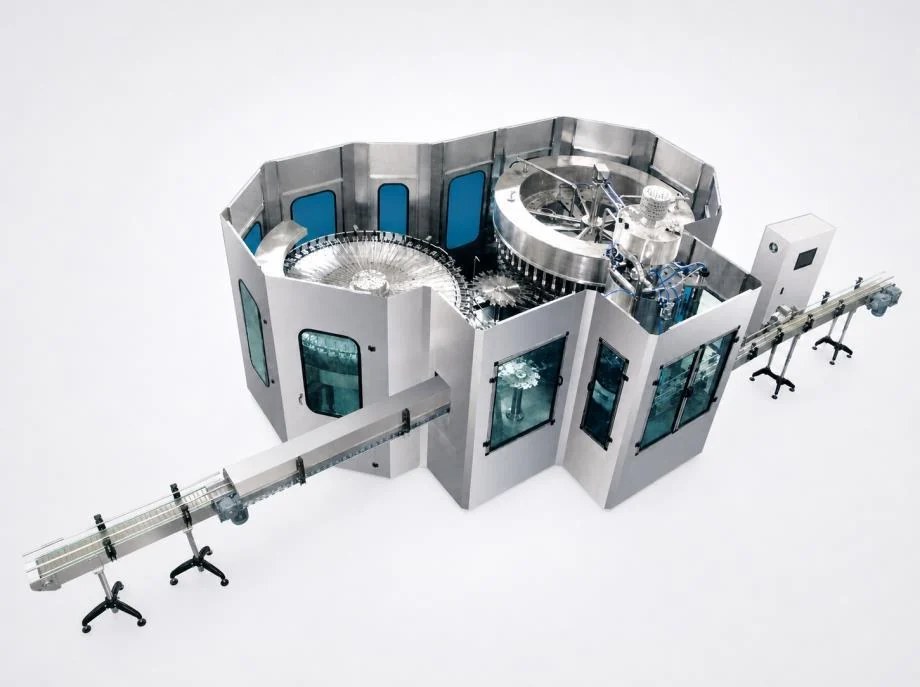
Juice and tea hot filling monoblock reference configuration
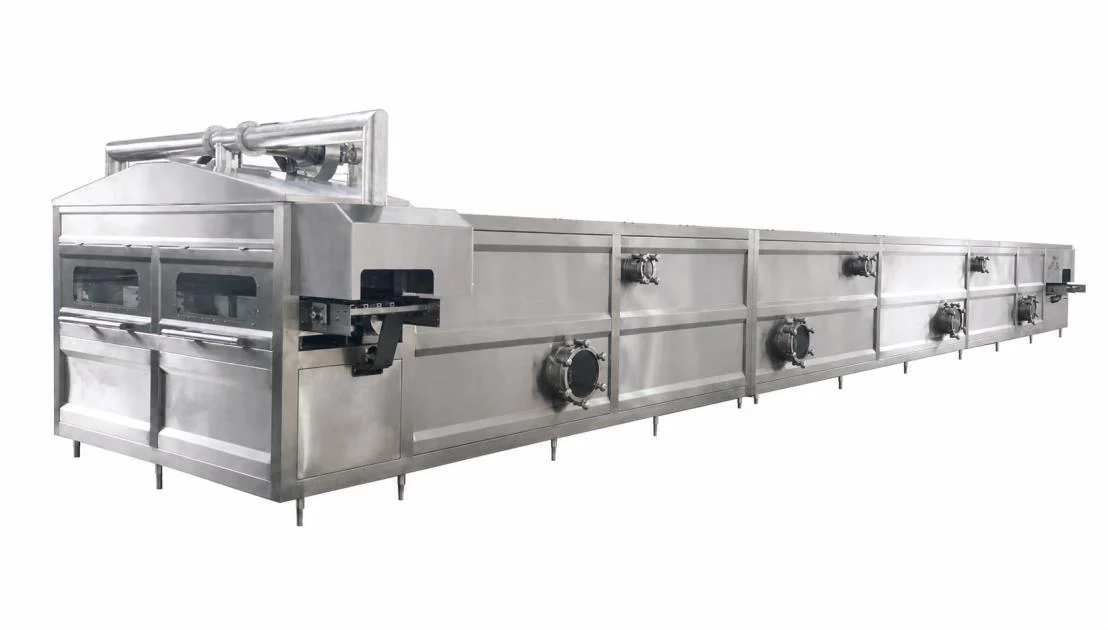
Beverage pasteurizing and cooling tunnel reference configuration
Juice beverage complete line architecture from preparation and heat treatment to packing

Answer first

What defines the juice line architecture?

The recipe and preservation route define the line. The catalog-supported hot-fill reference is a connected preparation-and-packaging chain, not simply a hot filling machine.

Juice hot-fill architecture
Preparation
01Water preparation 02Sugar / syrup 03Fruit blending 04Filtration
Product conditioning
01Buffer 02Homogenize if required 03Deaerate if required 04Heat treatment
Sanitation
Finished pack

Functional decision route, redrawn from the supplied catalog reference. It is not a P&ID or final equipment sequence.

Three questions to settle before buying this line

Does a juice bottling line include fresh-fruit extraction?

Not automatically. A concentrate-based line starts with ingredient receiving, water or syrup preparation and blending. Whole-fruit processing adds fruit-specific receiving, sorting, washing, extraction or pulping and waste handling. State whether the feed is whole fruit, purée, concentrate or a ready-to-fill beverage; otherwise two quotations can have very different starting boundaries.

Should this juice use hot fill, aseptic filling or refrigeration?

Decide from the actual formulation, acidity, pulp, quality targets, distribution conditions and required shelf life with the responsible process specialist. Hot fill needs a compatible bottle and closure; aseptic filling needs a validated product and package sterilisation system; a refrigerated route needs a maintained cold chain. None of these routes follows from the word “juice” alone, and UHT equipment alone does not make a line aseptic.

Where does treated juice go when the filler stops?

The proposal must show the stop signal, the destination of affected product, any permitted holding or return path, and the conditions for restart. Ask who approves residence limits and how out-of-condition product is identified and separated. Continuing to heat product in a buffer, automatically recirculating it or simply restarting the filler must not be assumed acceptable without the validated process basis.

For a useful first review, email the raw-material form, juice/nectar recipe summary, pulp details, target package and rate, and shelf-life/distribution objective. Include the agreed thermal-process basis if available; leave it open if it is not yet validated.

Preparation → filling: check the connection

Can each juice batch supply the hot-fill line fast enough?

Compare the juice actually released from blending with the liquid entering the bottles. Gross tank volume and mixer speed do not describe repeatable output: charging, blending, quality release, transfer and applicable cleaning all consume time.

Illustration: 4,000 bottles/hour × 500 mL = 2,000 L/hour entering bottles. Releasing 900 usable litres every 30 minutes supplies 1,800 L/hour: a 200 L/hour average shortfall before any separate product loss. At that cycle time, 1,000 released litres per batch only matches average demand; it adds no reserve.

Filled demand = bottles/hour × mL ÷ 1,000. Feed demand = filled demand ÷ (1 − loss/100). For CSD syrup, divide feed demand by (water parts + 1). Batch supply = usable litres × 60 ÷ cycle minutes.

Use the complete repeating cycle, not just mixing time. Count each loss once. For overlapping tanks, validate one combined release schedule instead of multiplying by the number of tanks. Average headroom does not prove instantaneous supply, hygiene, cooling duty, carbonation, thermal treatment or buffer adequacy.

Catalog evidence: page 39 connects preparation with product-dependent homogenization/deaeration, heat treatment, hot filling, inversion and cooling. The drawing supports the equipment chain, not a universal recipe or preservation schedule. This calculation does not determine treatment temperature, holding time or shelf life.

Example inputs only. Replace them with your own project before exporting.
Liquid entering bottles (L/h)
—
Required preparation feed (L/h)
—
Average batch supply (L/h)
—
Supply minus demand (L/h)
—

Example inputs only. Replace them with your own project before exporting.

Route-change triggers

These inputs can change more than one machine.

Use the table to identify which assumptions need confirmation before a configuration or quotation is treated as comparable.

Changed inputProcess consequencePackage / line consequence
Pulp, fibres or higher viscosityFiltration, pumping, homogenization and heat-transfer review changesFiller/product-path compatibility must be confirmed
Oxidation-sensitive formulaDeaeration and closed transfer may be requiredHeadspace and post-fill handling become part of review
Different preservation routeHeat-treatment, hygienic boundary and filling architecture changeHot fill is not automatically equivalent to aseptic processing
PET → glassThermal behaviour, closure and cooling route changeBottle handling and downstream protection differ

Recipe preparation

Build the preparation route around the recipe

Water, sugar/syrup, fruit feed, filtration and buffers establish the product stream. Homogenization and vacuum deaeration are included only when the confirmed product requires them.

  • Water and syrup preparation
  • Fruit ingredient feed
  • Filtration
  • Homogenization where required
  • Deaeration where required

Thermal interface

Connect heat treatment to filling

The heat-treatment method, holding conditions, buffer and filler inlet conditions must be developed as one hygienic process. This website does not prescribe a universal temperature.

  • Product-specific heat-treatment review
  • Hot-fill-compatible container and closure
  • CIP boundary
  • Stable transfer to the filler

Post-fill route

Treat the sealed bottle before decoration

The catalog reference includes bottle inversion for cap/head contact and shower cooling before labeling and packing. Applicability and final cooling profile depend on the product and package.

  • Closure and headspace review
  • Inversion where applicable
  • Controlled cooling
  • Drying, labeling and packing

Juice hot-fill architecture map

Connect the recipe and preservation basis to a cooled, pack-ready container

The sequence describes a common hot-fill decision route. The actual formulation, process authority and package evidence determine which operations apply and which conditions are acceptable.

Line stageInput to confirmArchitecture decisionRequired handover
Product and preservation basisJuice content, ingredients, acidity where known, particles, shelf-life and distribution intentConfirm whether the project follows a validated hot-fill basis or needs a different preservation architectureControlled recipe and named owner of the process basis
Water, syrup and juice feedRaw materials, supply form, batch size, charging, dissolution and storage needsDefine separate preparation and traceable ingredient-addition paths before final blendingMeasured and released ingredient streams
Blend and filtrationRecipe sequence, solids, fibres, particle range, batch cycle and required filtrationSelect mixing, transfer and filtration around actual product behavior rather than the beverage nameUniform prepared product at a declared condition
Optional product conditioningStability, texture, entrained air, oxidation sensitivity and sample or trial evidenceInclude homogenization or deaeration only when the confirmed formulation and process basis require itConditioned product with the responsible decision recorded
Heat treatmentProduct properties, validated treatment basis, flow, hold and diversion or return logicCoordinate heating and holding with the responsible process authority without applying a universal settingProduct released under the approved thermal-process basis
Hygienic buffer and transferBuffer duty, residence, pipe route, stop behavior, cleaning boundary and filler demandProtect the confirmed post-treatment condition through run, hold, stop and restart statesDeclared product condition at the filler inlet
Hot fill and closureFilling condition, container and closure drawings, headspace and thermal compatibility evidenceConnect hygienic filling and immediate closure to the approved package basisSealed package at the agreed fill and closure condition
Closure contact where applicableClosure geometry, headspace, product and approved treatment sequenceUse inversion or another cap or head-contact step only where the project basis calls for itCompleted contact step with defined transfer to cooling
Controlled cooling and dryingPackage thermal response, required outlet condition, water quality and downstream surface needsDevelop a controlled profile that protects product and package before inspection and decorationStable, dry container at the declared outlet condition
Inspect, label and packInspection, code, label material, grouping and saleable-pack endpointBalance the packing route against the same product, container and shift basisCompliant finished packs plus declared reject and record handling
CIP and production changeProduct-contact circuits, soil and allergen information where relevant, sequence and cleaning ownerIntegrate preparation, thermal, transfer and filler circuits with the production scheduleApproved cleaning boundaries, responsibilities and restart condition

Complete juice scope

Treat preservation, hot filling and post-fill handling as one architecture

Removing a product-dependent step or separating the filler from its upstream and downstream conditions can change the preservation and package basis.

01

Prepare the actual recipe

Define ingredients, particles and the operations needed to make a consistent product before treatment.

  • Water, syrup, concentrate or fruit-feed paths
  • Blending, filtration and controlled dosing
  • Conditional homogenization or deaeration
02

Protect the treated product

Keep heat treatment, buffer, transfer, filling and closure inside one hygienic operating basis.

  • Process-authority ownership of treatment conditions
  • Run, hold, return, diversion and restart behavior
  • Hot-fill container and closure compatibility
03

Release the finished package

Complete any applicable closure contact and controlled cooling before decoration and packing.

  • Inversion or cap or head contact only where applicable
  • Cooling endpoint, package stability and surface condition
  • Inspection, code, label and saleable-pack boundary

Juice enquiry brief

Send the recipe and package evidence before requesting a hot-fill line

A complete input set allows the preparation, treatment, filling, cooling and packing sections to be reviewed as one project instead of as isolated machines.

Product definition
Juice, nectar or juice drink; formulation summary; juice content; sweeteners; stabilizers; flavors and other relevant ingredients.
Product properties
Known Brix, acidity or pH, viscosity, pulp, fibres, particle size and settling or foaming behavior, with methods where available.
Preservation basis
Intended shelf-life and distribution route, approved or provisional heat-treatment and filling basis, and responsible process authority.
Raw-material supply
Water analysis; sugar, syrup, concentrate or fruit supply form; batch quantities; storage and traceability needs.
Optional operations
Evidence or specialist decision for filtration, homogenization, deaeration and other product-conditioning steps.
Reference package
Container and closure drawings, volume, material, supply condition and available hot-fill or thermal-compatibility evidence.
Reference output
Target rate tied to one product, container, closure, label and finished-pack pattern, plus the required shift plan.
Post-fill route
Applicable closure-contact or inversion requirement, cooling endpoint, drying, inspection and decoration condition.
Cleaning and changeover
Product families, soil or allergen considerations where relevant, CIP circuits, cleaning owner and available production window.
Factory and utilities
Floor space, electrical service, water qualities, heat source, cooling, air, drainage and site ambient conditions.

Illustrative juice enquiry

A provisional nectar recipe keeps several modules conditional

A buyer proposes a PET hot-fill nectar line, but the final pulp specification, thermal-process basis and bottle drawing are still under review.

  1. Record the current recipe revision, particle information and the owner and date for each unresolved product decision.
  2. Define water, syrup, fruit-feed, blending and filtration functions that are supported by the available recipe information.
  3. Keep homogenization, deaeration and final heat-treatment conditions conditional until the responsible review provides evidence.
  4. Request the bottle and closure drawings before confirming filling, headspace, inversion, cooling and container-handling interfaces.
  5. Issue the quotation scope with open decisions, alternative consequences and confirmation gates instead of treating the provisional route as validated.

Preliminary resultThe buyer receives a connected preliminary architecture while product-dependent modules, process settings, package compatibility and performance remain visibly open.

Illustrative only. This example does not validate a formulation, preservation result, thermal process, package or shelf life.

Buyer questions

Frequently asked questions

These are planning answers. Final process and equipment choices require a confirmed project brief.

Does every juice require homogenization and deaeration?

No. They are product-dependent operations and should be included only after recipe and process review.

Why is bottle cooling part of the line?

A hot-filled package may need controlled post-fill treatment before labeling and packing. The product and container determine the final cooling route.

How to read the technical evidence

Catalog reference The supplied 2026 catalog supports the named CSD and juice/tea equipment chains and is the source for the redrawn functional routes.

Engineering principle Interface explanations show why product, process, package, utilities and line balance must be reviewed together.

Project confirmation The routes are not a final process design, P&ID, validated cycle, quotation, availability statement or performance guarantee. Signed project documents define the final scope.

Allot Tech project desk

Review the juice process, hot-fill package and cooling route.

For a useful first reply, send the beverage, package, target good output and factory. If a line is already operating, add the observed symptom, first-known-good and first-known-bad time, affected SKU, photos, alarms and available production data.

Company verification: visit allottech.com.