Turnkey Beverage Bottling Line: Product to Finished Pack
A turnkey beverage bottling line is a coordinated process-to-pack project with an explicit responsibility matrix—not a machine list with an undefined factory, utility and acceptance boundary.
Engineering reference · Product and project confirmation required
Catalog equipment reference
Final equipment, layout and performance are confirmed against the project brief.
Answer first
What should a turnkey beverage bottling line include?
It should connect product preparation, container supply, filling and closure, post-fill treatment, inspection, labeling, packing, controls and agreed execution services around one confirmed beverage and package. Every utility connection, building work, installation task, test and buyer-supplied item still needs a named owner.
From requirement to decision
Make “turnkey” testable at the connections between machines
A complete equipment list is not an interface agreement. For each handover below, assign a named supplying party, a named receiving party and one party responsible for closing the interface. These are contract-planning examples, not a promise that every listed service is included in every Allot Tech project.
Illustrative planning example — replace with your project’s verified basis
Interface
Specify before the order
Handover evidence
Decision if evidence is missing
Chiller → CSD mixing/carbonation
Who supplies the chiller, circulation pumps, pipework and insulation; required utility condition at the agreed connection; process demand at the reference beverage rate.
Matching utility schedule, marked connection drawing and operating readings at the agreed test load.
Keep utility supply and process cooling as separate open scope items. A connection on a machine is not proof that the external utility plant is included.
Heat treatment → hot filler
Validated product conditions, stop signal, affected-product destination, restart approval and responsibility for the control interface.
Approved cause-and-effect sequence and witnessed stop/restart test records with traceable product disposition.
Do not assume untreated, held or recirculated product can enter saleable production. Obtain the process owner’s approved criteria before acceptance.
Container drawings, approved operating window and a continuous transfer test through cooling and labelling on the reference package.
Keep bottle deformation, condensation and label adhesion as open interface checks, not isolated vendor problems after installation.
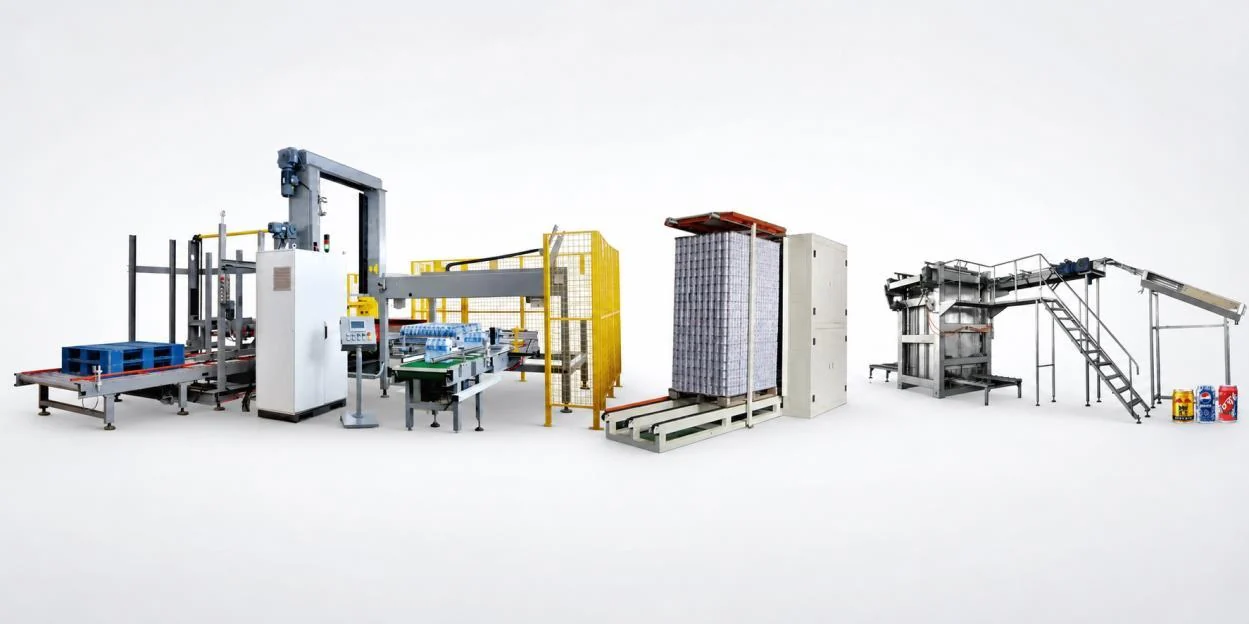
Packed product → buyer logistics
Whether the endpoint is loose bottles, shrink packs, cases or pallets; conveyor elevation; palletizing and forklift handover ownership.
Layout with a marked supply endpoint and acceptance count at that endpoint.
Do not accept filler counter totals as evidence for a contracted finished-pack output without accounting for rejects and downstream losses.
Before shipment: prove what can be proved
Agree the factory acceptance test materials, available utilities, reference SKU and test duration. Record which connections are tested, simulated or deferred. A simulated upstream signal is not a completed on-site process test. Keep unresolved items on a signed action list with an owner and closure evidence.
On site: close the deferred boundaries
Agree installation readiness, site test scope, training, document language, spare-parts list and unresolved-item procedure. Where a third party supplies utilities or equipment, name who coordinates the integrated test. Define acceptance and commercial milestones in the project contract; do not infer them from the word “turnkey”.
Discuss your own project with Mr Kcal at Allot Tech. The email link opens a blank project brief for you to edit; nothing is sent automatically.
Training + handoverTraining, manuals, drawings, software, spares and support transition.
Rows with a usable status0 / 8
Rows still needing clarification8 / 8
Use the first technical review to close the open rows.
Emailing this worksheet gives the Allot Tech project desk a defined starting point. The reply can focus on missing inputs, the preliminary process-and-package route, scope interfaces and the next drawings or samples needed before a comparable quotation.
Selections stay in this browser unless you choose to copy or email the summary. Verify the project desk at allottech.com.
01 / Technical basis
Freeze the product route before the equipment boundary
Turnkey scope becomes meaningful only after the beverage, preservation approach, container and reference output identify the real preparation, filling and post-fill route.
Recipe and product condition
Still, carbonated or thermal route
Reference PET, glass or can package
Output tied to one SKU and pack pattern
02 / Responsibility matrix
Assign every interface to the supplier, buyer or both
Building, drainage, utilities, local labor, offloading, interconnection, consumables and permits are not automatically included by the word turnkey. Record each interface in the commercial scope.
Equipment and interconnecting conveyors
Process piping, electrical and controls limits
Utility generation and connection points
Installation, commissioning and training roles
03 / Acceptance
Carry the same reference condition into FAT and site handover
The accepted product, package and rate basis should follow the project from proposal through drawings, manufacture, testing, installation and open-item closure.
Approved documents and drawings
FAT scope and available test materials
Site readiness and SAT conditions
Training, spares and final handover records
Turnkey responsibility check
Make each workstream visible before price comparison
A complete proposal should show the technical basis, included supply and named owner for every interface.
Workstream
Confirm before quotation
Evidence to request
Product process
Recipe, process outcome, filling condition and CIP boundary
Process description and equipment list
Container + pack
Drawing, closure, label, pack and changeovers
Package matrix and change-part scope
Factory interfaces
Layout, access, drains and connection points
Layout and interface schedule
Utilities
Quality, pressure, temperature, flow and owner
Utility schedule with reference condition
Execution
FAT, shipping, installation, SAT, training and handover
Responsibility and acceptance matrix
Evidence boundary
What supports this guide—and what still needs confirmation.
Evidence labels keep a reference architecture separate from a final design or commercial promise.
Catalog reference
The supplied catalog supports connected CSD and juice/tea process-to-pack reference routes.
Engineering interpretation
The turnkey boundary is developed by matching product, package, factory and execution interfaces.
Project confirmation
Only the signed technical and commercial scope defines included supply, performance and responsibilities.
Buyer questions
Frequently asked questions
These are planning answers. Final process and equipment choices require a confirmed project brief.
Does turnkey automatically include the factory building and utilities?
No. Turnkey is only useful when the quotation identifies the exact supply and responsibility boundary. Civil works, utility generation and local installation can be included, excluded or buyer-supplied.
Can a turnkey line be quoted from bottles per hour alone?
No. The product, filling condition, package, pack format, site and execution basis must be fixed before scope and price are comparable.
What should a buyer send first?
Send the beverage and recipe description, container drawing, target output, label and pack, destination, factory status and known utility information.
Continue the decision
Follow the next project interface
Move between beverage, process, package and engineering decisions that directly affect one another.
A complete beverage line connects recipe preparation, process conditions, container handling, filling, post-fill treatment and packaging around one confirmed product brief.
A useful beverage bottling line budget starts with one product, package and output basis, then separates process equipment, packaging equipment, site interfaces and project execution instead of relying on an unsupported headline price.
Capacity planning converts the sales requirement into one reference container rate, product flow, batch schedule and sustainable pack rate before equipment speeds are compared.
A beverage bottling line RFQ should give every supplier the same product, process, package, output, factory and execution basis. “Send your best line” produces machine lists that look comparable but often have different boundaries.
How to read the technical evidence
Catalog reference The supplied 2026 catalog supports the named CSD and juice/tea equipment chains and is the source for the redrawn functional routes.
Engineering principle Interface explanations show why product, process, package, utilities and line balance must be reviewed together.
Project confirmation The routes are not a final process design, P&ID, validated cycle, quotation, availability statement or performance guarantee. Signed project documents define the final scope.